You can have vision for your future and still feel stuck in your present.
You can love God, care deeply about your family, work hard, lead people, and still know that something in your life is not moving the way it should. I have learned not to confuse being busy with being aligned. They are not the same thing.
Sometimes the problem is not that you are doing too little. The problem is that too many parts of your life are competing for your attention without enough order, clarity, or structure.
When that happens, the natural response is to try to fix everything at once. You start thinking about your health, finances, marriage, spiritual life, business, habits, schedule, unfinished goals, and every decision you have been putting off.
Before long, the size of the problem becomes overwhelming.
I do not believe most people need to rebuild their entire lives overnight. I believe they need to identify the area creating the most drag, understand what is happening underneath it, and make one clear move that changes their direction.
That is what “One Move Away” means to me.
It is not a promise that one decision will solve every problem. It means that one honest act of obedience, discipline, courage, or strategy can change what happens next.
If you feel stuck, that is where I would begin.

Step 1: Identify the area creating the most friction.
Do not begin by asking yourself what is wrong with your entire life. That question is too broad to be useful.
Instead, ask yourself where you are experiencing the most friction right now.
It may be your mental health, physical health, spiritual life, marriage, finances, leadership, business, or daily routine. The specific category matters less than your willingness to be honest about where the pressure is coming from.
Pay attention to the area that keeps demanding your attention. It is usually the issue you continue thinking about, explaining, postponing, or working around.
You may already know what it is.
Perhaps there is a conversation you have avoided for months. Maybe your finances are creating stress because you have not wanted to look closely at the numbers. You may be exhausted because your schedule has no room for recovery. Your business may feel stagnant because you have been planning more than executing.
Clarity often begins when you stop describing your entire life as a problem and identify the specific area that needs attention.
Ask yourself this question: What part of my life is creating the most unnecessary pressure right now?
Give yourself one answer.
You do not need to fix it yet. You only need to name it accurately.

Step 2: Look for the pattern beneath the problem.
Once you identify the pressure point, do not stop at the obvious problem.
Look underneath it.
The visible problem is often a symptom of a pattern that has been repeating for much longer.
You may think you have a time-management problem when the real issue is that you continue saying yes without deciding what each commitment will cost you.
You may think you lack discipline when the real problem is that every routine you create depends on motivation.
You may think your business needs more opportunities when you have actually been avoiding the consistent work that creates those opportunities.
You may think you need more clarity when you already know what needs to happen and simply do not like what the decision requires.
This is why I believe the better question is not simply, “What happened?”
The better question is, “What keeps happening?”
If the same result continues showing up, there is usually a pattern feeding it.
That pattern may be avoidance, overcommitment, fear, inconsistency, poor boundaries, lack of preparation, or a habit you have tolerated because changing it would require discomfort.
You cannot correct what you refuse to identify.
That does not mean you condemn yourself. It means you become honest enough to deal with the real issue.
Ask yourself what you repeatedly do, or repeatedly avoid doing, that contributes to the result you keep getting.
That answer will usually take you closer to the real problem.
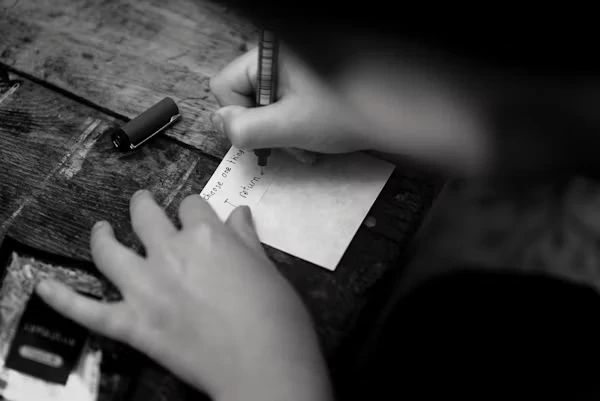
Step 3: Determine whether you need more clarity or more courage.
There are times when you genuinely need more information before making a decision.
There are also times when you already know what needs to happen.
Learning to tell the difference matters.
Sometimes waiting is wise. Sometimes patience is an act of obedience. However, there are also moments when waiting becomes a way of delaying something difficult.
You may already know that a conversation needs to happen. You may know that a boundary needs to be established. You may know that your spending has to change, your schedule needs to be adjusted, or a habit needs to end.
You may know that the business does not need another idea. It needs you to follow through on the work already in front of you.
You may even know that the clarity you keep asking God for has already come in the form of something you have been unwilling to act on.
I believe in prayer, patience, wise counsel, and careful decisions. I also believe there is a point when faith has to become visible in the way we live.
Faith is not frantic activity, but neither is it endless hesitation.
Sometimes obedience looks like moving.
Ask yourself whether you truly need more clarity or whether you already know your next responsible step.
If you already know, the issue may no longer be clarity.
It may be courage.

Step 4: Turn what you know into one specific action.
Once you know what needs attention, resist the urge to create a complete life-reinvention plan.
Make the next action specific.
This is where many people make change harder than it needs to be. They create a plan so large that it requires a completely different version of themselves to carry it out.
They decide that everything will change on Monday. They are going to wake up earlier, work out every day, read more, pray longer, overhaul the budget, fix the business, improve the marriage, eliminate every distraction, and somehow maintain the entire system immediately.
Then real life interrupts the plan.
When the plan collapses, they assume they are the problem.
Sometimes the problem is simply that the plan was too large.
A useful next move is small enough to complete but meaningful enough to interrupt the pattern you identified.
If your finances are causing stress, your move may be to review the last thirty days of spending tonight and identify where the money is going.
If your marriage needs attention, your move may be to set aside an uninterrupted hour for the conversation you have both been avoiding.
If your business has stalled, your move may be to contact five prospective clients before noon tomorrow instead of spending another day changing your website.
If your spiritual life has become inconsistent, your move may be to begin tomorrow morning with Scripture and prayer before opening your phone.
Notice that each action is specific.
You know what needs to happen, and you know whether you completed it.
That is important because vague intentions are difficult to execute.
Specific actions create movement.

Step 5: Create evidence that you followed through.
Good intentions can make us feel as though we have made progress before anything has actually changed.
That is why I believe you need evidence.
I call it a receipt.
A receipt is simply proof that you completed the move.
If you said you were going to make the call, the call was made. If you said you were going to create the budget, the budget exists. If you said you were going to schedule the appointment, it is on the calendar. If you said you were going to have the conversation, you had it.
The goal is not to become obsessed with checking boxes.
The goal is to stop giving yourself credit for intentions that never become action.
One completed action will not solve every problem in your life, but it does something important.
It interrupts the pattern.
That matters because repeated actions become rhythms, and healthy rhythms eventually become structure.
Structure is what allows you to keep moving when motivation fades.
Over time, you stop depending on how you feel and begin building evidence that you can trust yourself to follow through.
That is how discipline grows.
One move can change your direction without solving the entire problem.
I want to be clear about what I am not saying.
Some problems take time to repair.
Some relationships require patience and repeated work. Financial problems may take years of disciplined decisions to correct. Physical and mental health challenges may require professional care. Certain consequences cannot be removed simply because you finally made a good decision.
“One Move Away” does not mean life is simple.
It means that even when the entire problem cannot change today, your direction can.
One workout does not make you healthy, but it can end a period of inactivity.
One budget does not create financial freedom, but it can end financial avoidance.
One apology does not restore trust, but it can end your refusal to take responsibility.
One hour of focused work does not build a business, but it can end another day of procrastination.
One honest conversation may not repair a relationship, but it can begin a different kind of relationship.
The move matters because direction matters.
You do not have to arrive today.
You do need to stop moving in the wrong direction.
Your calling requires the capacity to carry it.
Over time, I have become less impressed by ambition alone.
Ambition is easy to talk about.
Capacity has to be built.
A person can have a strong vision and still have a life that is not prepared to carry it.
That is why I believe we should ask ourselves a harder question before constantly asking for more. Can the life I have built carry what I am asking for? Honesty is needed for clarity to become present. Can my body carry more responsibility without breaking down? Just take a moment to look at yourself. Ask yourself. Can my marriage carry more pressure? Can my character carry more influence? Can my schedule carry more opportunity? Can my financial habits carry more income? Can my spiritual life carry greater responsibility?
Those questions are not meant to limit your vision.
They are meant to prepare you for it.
Growth requires more than desire. It requires structure, maturity, and stewardship.
Discipline is not punishment.
It is part of becoming capable of carrying what matters.
Your next move does not need to be complicated.
If you have read this far, do not leave with ten new goals.
Choose one area. Identify the pattern underneath it.
Decide whether you truly need more clarity or whether you already know what needs to happen.
Then choose one specific action and decide when you will complete it.
Afterward, look for the receipt.
You do not need to fix your whole life today.
You need enough honesty to identify what is out of alignment, enough courage to confront the pattern, enough faith to act on what you already know, and enough discipline to follow through.
Then you repeat the process. That is how alignment is built. It happens one decision at a time. It happens one act of obedience at a time. It happens one completed move at a time.
Your future does not need another promise from you. It needs evidence that you are willing to build it. If you know what your next move is, make it. Then build from there. And don't look back.
Make the move. Get aligned. Build what matters.
Daniel Emerson CEO